
FK 1230 (FK-5-1-12) Clean agent system are employed to protect critical installations formerly protected by Halon 1301.
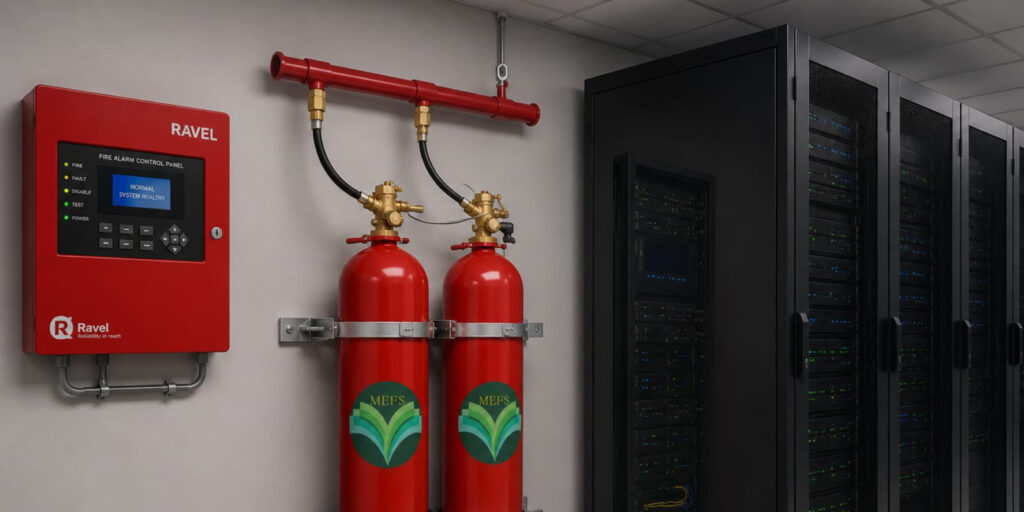
FK 1230 (FK-5-1-12) systems reach extinguishing levels in 10 seconds or less, stopping ordinary combustible, electrical, and flammable liquid fires before they cause significant damage. That’s the fastest fire protection available, period. When fire is extinguished this quickly, it means less damage, lower repair costs, and an extra margin of safety for people. It also means less downtime and disruption of business.
Key Benefits:
- FK 1230 (FK-5-1-12) agent compiles with NFPA Standard 2001 : standard for Clean Agent fire Extinguishing systems, EPA SNAP Program (Significant New Alternate Policy).
- These agents are classified as suitable for use in occupied areas and are considered to have no ozone depleting potential (ODP).
- MFK 1230 (FK-5-1-12) fire suppressant can be safely used where people are present.
How it works:
When a fire is detected (often by a smoke or heat detector, or a VESDA system), the system automatically:
- Sounds an alarm and gives a pre-discharge warning
- Initiates a time delay (typically 30–60 seconds) for evacuation
- Releases the suppression gas into the enclosed space
- The gas floods the room, suppressing the fire
Advantages:
- No water damage — Safe for electronics, documents, and sensitive equipment.
- Fast acting — Suppresses fire within seconds.
- MClean — Leaves no residue
- Safe for occupied spaces — Inert gases and clean agents (at correct concentrations) are relatively safe for brief human exposure
- Total flooding — Fills the entire room, reaching fires in hidden or hard-to-access areas
Limitations:
- Room integrity — The space must be well-sealed to maintain gas concentration; leaks reduce effectiveness.
- Cost — More expensive to install and recharge than water-based systems.
- Single use — Once discharged, cylinders must be refilled or replaced